
First Call & Damage Assessment
Share the location and what happened. We help assess affected buildings and units, identify priorities, and coordinate the next steps with your property team.
T-Rock Construction helps multifamily and commercial property teams plan fire, water and storm damage restoration. Define the affected buildings, repair scope and access needs for apartment fire reconstruction and commercial buildback.
Dallas–Fort Worth headquarters · offices in Atlanta, Orlando & Chicago
Explore coverageShare the location and what happened. We help assess affected buildings and units, identify priorities, and coordinate the next steps with your property team.
Repair and restoration of building damage following storms and high winds.
Restoration scopes for water intrusion and flood damage. Identify affected spaces and available assessments so interior, exterior, and building-system repair needs can be reviewed together.
Address damaged roofing and related building restoration needs following hail and severe weather.
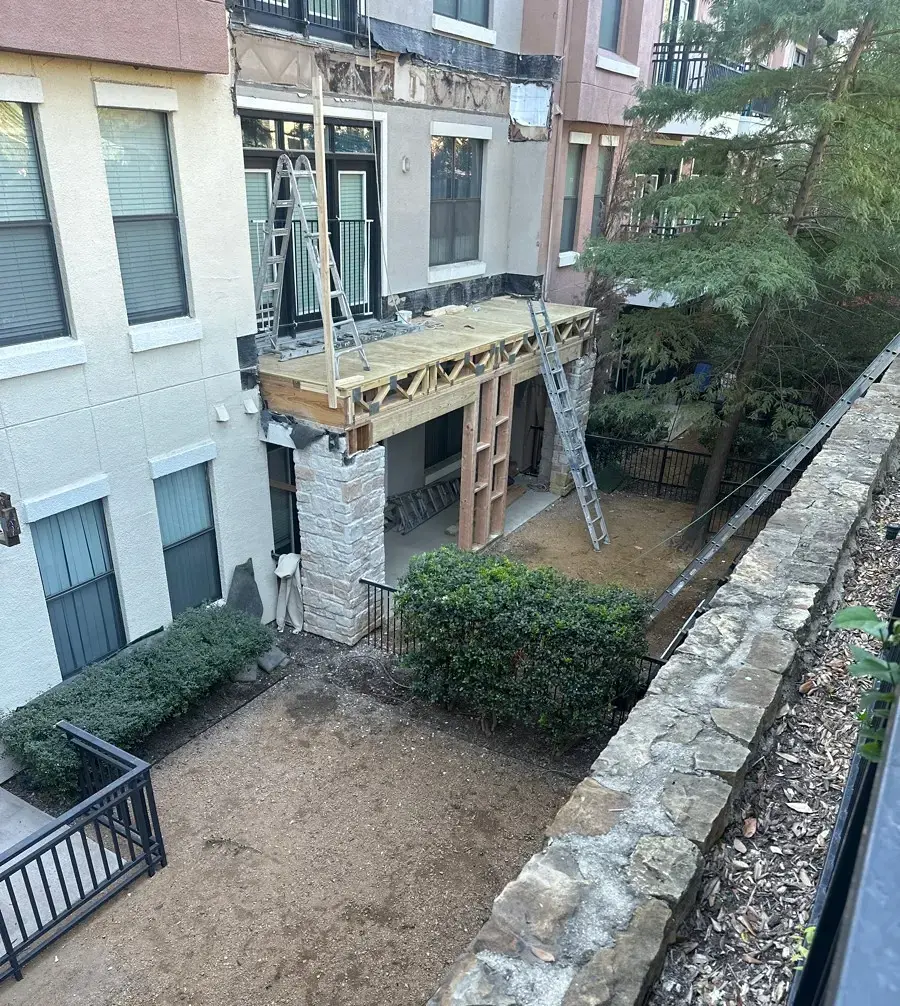
Coordinate facade, balcony, landing, and building envelope repairs associated with the damage.
Coordinate interior and exterior reconstruction within the agreed repair scope, including trade sequencing, material decisions, and access with the property team.
For urgent fire, water, or storm damage, call with the location and what is known. Available photos, assessment documents, affected-unit lists, and access information can help organize the next discussion through restoration and buildback. Review our construction qualifications as you evaluate the scope.
Planning ahead? Explore property walks and CapEx planning, or prepare with our property walk checklist.
Schedule a Property WalkCall with the property location, an on-site contact, the type of event, and the buildings or units affected. Share known access restrictions and any photos or assessment documents already available. You do not need a complete RFP; the first conversation can help organize priorities and the information needed for restoration planning.
Buildback is reconstruction after damage and repair needs have been assessed. Compare relevant reconstruction work records and ask for the proposed site contact, project-specific qualification documents and a written list of open decisions before an award. Record emergency measures or other work already performed separately from the proposed reconstruction. Define affected spaces and the agreed repair scope, including roofing, interiors, facades or other components. Review access, materials and the proposed sequence with your property team. Identify outstanding assessments and inspection dependencies before treating the scope or schedule as confirmed.
After water damage, distinguish repairing the moisture source from replacing damaged finishes. Before enclosing walls or installing coatings and flooring, confirm who checks drying readiness and which project or product requirements apply. A surface can appear dry while moisture remains within the material. Keep assessment and drying records with the reconstruction scope so unresolved moisture is not hidden by new finishes.
Further reading: EPA moisture-control guidance (PDF).
Request a dated update by affected building or space, separating completed activities from remaining work, inspection dependencies and owner decisions. Agree who confirms that an area can move to the next trade and how unresolved items will be reported. The Dallas fire-loss reconstruction record pairs field photographs with inspection-dependent next steps. That example documents work in progress; it does not establish final completion or future response times.
Illustrative progress-report example: a wall-framing activity is recorded as complete in Building A, but wall closure is still awaiting a required inspection. Record the activity and the open dependency separately. A photograph of framing does not by itself confirm inspection approval or completion of the reconstruction scope.
A useful update identifies the building and work area, the report date, work performed, the dated supporting photograph or record, the open decision, the responsible contact and the next step. If the inspection outcome is not recorded, mark it unverified and ask who will supply the result before the next stage. Keep proposed dates separate from confirmed commitments.
Use this example to discuss reporting expectations before an award. Compare it with our dated Dallas fire-loss reconstruction record and agree what evidence your property team needs for each milestone.
Record the affected buildings, units and shared areas, along with assessment information, access restrictions and emergency work already performed. Separate demolition, structural or building-system work, exterior repairs and interior reinstatement so bidders can identify the same work boundaries. Keep unknown conditions and required design or specialist review visible.
Identify inspection dependencies, material decisions and who can authorize scope changes. An early target date is not a confirmed move-back date; agree how readiness and outstanding items will be documented with the property team. Use the project scope brief to collect the known facts before a detailed reconstruction proposal.
Collect the available damage assessments, dated photographs, completed emergency-work records and current access restrictions. Identify who holds the records for each affected building or unit. Keep the work already authorized separate from proposed reconstruction so omissions and overlapping scopes can be resolved.
List outstanding specialist reviews, inspections, material selections and decisions needed before the next stage. Record the responsible contact and the evidence needed to close each item. Agree how the property team will receive updates and review scope changes. The planning brief can organize known information; it does not confirm repair readiness, insurance coverage or a completion date.

Commercial and multi-family construction, renovation, and restoration. Wherever your portfolio takes you.
Explore weekly CapEx reports, shared T-Rock Cam images, schedules, proposals, and documents. Switch from owner to property team and customize sample access. Take a guided walkthrough or explore at your pace. Fictional data. No sign-in required. See the client portal capabilities.
From smaller service jobs to major renovations, we can help. Bring a defined scope or start with a property walk, due diligence, and CapEx budgeting.
For urgent property damage, call (214) 548-4733.